Paris Cathedral TicketsTickets & Tours
Paris · History & visitor context

Notre Dame Cathedral History & Visitor Information

Notre-Dame is more than a Gothic landmark or the site of the 2019 fire. It began as a Roman Catholic cathedral in 1163 under Bishop Maurice de Sully, grew over about two centuries, and reopened for worship and visitors in 2024. Learn how its faith, fabric and restoration shape what you see inside.

Formal nameCathédrale Notre-Dame de Paris
Construction began1163
Building campaignAbout 200 years
Still used forPrayer, services and visits
Origins

Built for worship, then made into a Paris landmark

Its long nave, altar and chapels make sense first as places for Catholic worship. Visitors still share the building with people who come to pray.

01 1163

Maurice de Sully begins a new cathedral

Bishop Maurice de Sully laid the first stone in 1163. The project began on Île de la Cité as a Roman Catholic cathedral dedicated to the Virgin Mary.

Why this matters The building was planned for worship and procession, not as a museum with one best viewing point.
02 1239–1806

Relics gave the cathedral another role

Saint Louis brought relics of Christ’s Passion to Paris in 1239 and carried them in procession to Notre-Dame. They joined the Treasury in 1806, linking the cathedral to major Catholic devotion.

Look beyond the nave The Treasury is part of the cathedral’s religious story, not simply a collection of old objects.
!
It is not a medieval building frozen in one moment.

Notre-Dame took about two hundred years to build, then changed again through damage, repair and restoration. The clean interior and rebuilt roofline belong to a cathedral reopened on December 8, 2024.

Notre-Dame Cathedral interior with high arches and visitors
A long church made to direct attention toward the choir The nave’s columns, pointed arches and ribbed vaults are medieval ideas. The restored interior makes their height and rhythm easier to read again.
How it changed

Seven layers behind the cathedral you see today

Each period left a different task for the building: worship, devotion, survival after fire, and a return to public life.

01 1163

The first stone starts the project

Maurice de Sully began the cathedral’s first construction phase. He set in motion a church large enough for a growing religious centre on the Seine island.

What remains The basic ambition survives: a tall, long interior built around collective worship.
02 1163–c.1363

Medieval builders complete the cathedral

Construction continued for about two centuries. That long campaign produced a building that reads as one whole from afar, yet developed through changing medieval decisions.

What to notice Compare the strict rhythm of columns with the more elaborate portals and windows.
03 1239

The Passion relics arrive in Paris

Saint Louis carried relics of Christ’s Passion in procession to Notre-Dame. Their presence strengthened the cathedral’s role in the religious life of Paris.

Important distinction Relics were devotional objects, not decoration made only for visitors to admire.
04 1806

The relics enter the Treasury

The Passion relics later joined the Treasury of Notre-Dame in 1806. This placed them within the cathedral’s collection of objects used in Catholic worship and ceremony.

Visitor takeaway The sacred objects explain why side spaces can carry as much meaning as the central aisle.
05 April 15, 2019

Fire destroys the framework and spire

The fire destroyed the medieval roof framework and spire. The stone structure survived, but the cathedral needed major stabilisation and restoration.

What changed The roof and spire seen today are the result of reconstruction, not untouched medieval fabric.
06 2019–2024

Restoration repairs the cathedral for return

Restoration focused on reopening the building for worship and visitors. The work addressed the damaged roof and spire, alongside the cathedral interior.

Look upward The renewed roofline is part of a modern restoration of a medieval church.
07 December 8, 2024–present

Worship and visits begin again

Notre-Dame reopened for worship and visitors on December 8, 2024. It remains a Roman Catholic church, so religious life and public visits continue in the same building.

What to notice Quiet chapels, the choir and the altar are working religious spaces, not only historic scenes.
Faith

A church with living rituals

The cathedral’s layout serves Mass, prayer and processions. This explains the importance of the altar, choir and chapels.

Light

Windows shape the interior

Rose windows use coloured glass and stone tracery together. Their appearance changes with daylight and weather.

Loss and repair

Restoration is part of the story

The 2019 fire did not end Notre-Dame’s history. It created another visible layer in its long life.

Five dates worth remembering before you visit

You do not need every medieval name. These five dates explain the cathedral’s main layers while you stand inside.

  1. 1163: Maurice de Sully lays the first stone, beginning the cathedral project.
  2. 1239: Saint Louis brings relics of Christ’s Passion to Paris in procession to Notre-Dame.
  3. 1806: The Passion relics join the Treasury, adding to the cathedral’s religious collection.
  4. 2019: Fire destroys the medieval framework and spire, making restoration necessary.
  5. 2024: Notre-Dame reopens on December 8 for worship and public visitors.
Architecture & meaning

A building designed to teach through space, stone and light

Gothic architecture is not only decoration here. It creates a route through a church where height, light and imagery support worship.

How the building works

A processional route under ribbed vaults

The nave is a long central space. Pointed arches, tall columns and ribbed vaults direct the eye upward and carry it toward the choir.

  • The central aisle stretching from entrance to choir
  • Columns rising into pointed arches
  • Ribbed vaults high above the nave
Why the imagery matters

Portals and windows communicate belief

The west façade and rose windows use Christian imagery as part of the cathedral’s devotional setting. The portals prepare visitors before they enter.

  • The Portal of the Virgin on the left
  • The central Portal of the Last Judgment
  • Paris, Banks of the Seine World Heritage property

The west façade is not only an entrance

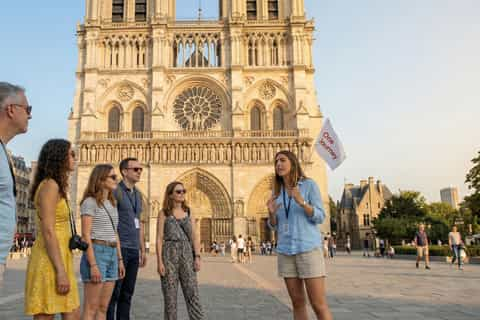
Most visitors photograph the façade, then move on. Its three portals are a sculpted programme: the Virgin on the left, the Last Judgment in the centre, and Saint Anne on the right.

The central portal also leads into the cathedral. Pause outside first, because its religious subject changes the meaning of the doorway.

The rose windows are more than coloured glass

The west, north and south rose windows combine religious imagery with stone tracery. Their circles and radiating structure matter as much as the glass.

Do not expect equal light on every window. Their effect depends on daylight, which is part of how the medieval interior works.

What to notice

Read a few details, not every surface

The cathedral can feel overwhelming. Use this short list to connect what you see to the people, worship and restoration explained above.

1. The view from the entrance

Pause before walking. The long nave shows the processional route created by the medieval building campaign.

2. The central west portal

Look at its Last Judgment imagery before entering. It is both a visitor doorway and a religious threshold.

3. The rise of columns and vaults

Follow one column upward into the pointed arches. This is how the interior turns structure into a sense of height.

4. Each rose window separately

Compare the west, north and south windows as stone-and-glass designs, not simply three bright photographs.

5. The choir and altar

These spaces explain Notre-Dame’s continuing purpose. They belong to a church where services still take place.

6. The rebuilt roofline outside

Remember the 2019 fire when you look upward. The restored spire and framework tell a recent chapter of recovery.

Ready to visit

See Notre-Dame as layers of history, not one famous building

Begin at the west façade, then pause at the nave before moving toward the choir and chapels. This order follows the cathedral’s own route from public threshold to worship space, while keeping the medieval structure and modern restoration in view.